Mission: Expanding Access to Clean Energy
The SOMAH Program provides financial incentives for installing solar panel and integrated storage systems that benefit both low-income tenants and property owners of multifamily affordable housing properties throughout California. The California Public Utilities Commission (CPUC) oversees the SOMAH Program.
By expanding access to clean energy, SOMAH helps lower utility costs for households that have historically faced barriers to these benefits. The program supports solar and energy storage solutions for residents of multifamily affordable housing, helping communities strengthen energy resilience and increase long-term savings.
SOMAH's community-centered approach creates lasting benefits for residents and property owners while also supporting the multifamily housing solar market and creating job opportunities in disadvantaged and low-income communities.
Through this work, SOMAH aims to install 300 megawatts of generating capacity by 2032.
Oversight and Program Administration
In 2018, the CPUC selected a team of program administrators through a competitive bid process to implement the program.
The SOMAH Program Administrators (PAs) are the Center for Sustainable Energy (CSE), the primary contract holder; GRID Alternatives; the Association for Energy Affordability (AEA); and California Housing Partnership (CHP).
Each PA has a different role:
CSE
Application review and eligibility verification; database management; marketing, education, and outreach (ME&O) coordination with property owners, contractors, and stakeholders; contract maintenance and financial tracking with SCE; regulatory work; and program reporting.
GRID Alternatives
ME&O coordination for workforce development and tenants, Advisory Council coordination, management of community-based organizations, solar feasibility, and program reporting.
AEA
Technical assistance, bidding solicitation, energy efficiency integration, and property owner engagement.
CHP
ME&O for property owners and developers, and affordable housing subject matter expertise.
Program administrators submit monthly invoices for administrative services provided under their contracts. The CPUC reviews these invoices before authorizing payments.
Funding
SOMAH is funded through greenhouse gas allowance auction proceeds from Pacific Gas and Electric Company (PG&E), San Diego Gas & Electric Company (SDG&E), Southern California Edison Company (SCE), Liberty Utilities Company, and PacifiCorp.
The California Public Utilities Commission (CPUC) allocates these funds through formal decisions. The funds are distributed through the Energy Resource Recovery Account (ERRA) for PG&E, SDG&E, and SCE, and the Energy Cost Adjustment Clause (ECAC) for Liberty and PacifiCorp.
SOMAH provides an average of $100 million in financial incentives each year. Incentive payments are made in two stages: 60% after solar and storage projects reach mechanical completion, and the remaining 40% after interconnection is complete.
The amount of funding used each year depends on the number and size of completed projects. Administrative costs are capped at 10% of total program funding. Any unused funds remain in the utilities’ SOMAH Balancing Accounts and roll over at the end of each fiscal year.
A Commitment to Equity
SOMAH is dedicated to equity through a community-based approach that amplifies the voices of and is responsive to the communities it serves. Through public forums, direct community outreach and education partnerships, and the oversight of an Advisory Council and Job Training Organization Task Force, the SOMAH Program develops partnerships that further develop SOMAH’s inclusiveness and capacity to engage.

Program Impacts
Our partnerships throughout California help us deliver renewable energy and financial benefits to multifamily affordable housing tenants.
Program Funding
Created by the California Legislature, SOMAH’s goal is to reduce greenhouse gas emissions.

Stay Connected
Sign up below to receive information about program updates, webinars and events.
Energy and Environmental Justice are in SOMAH's DNA
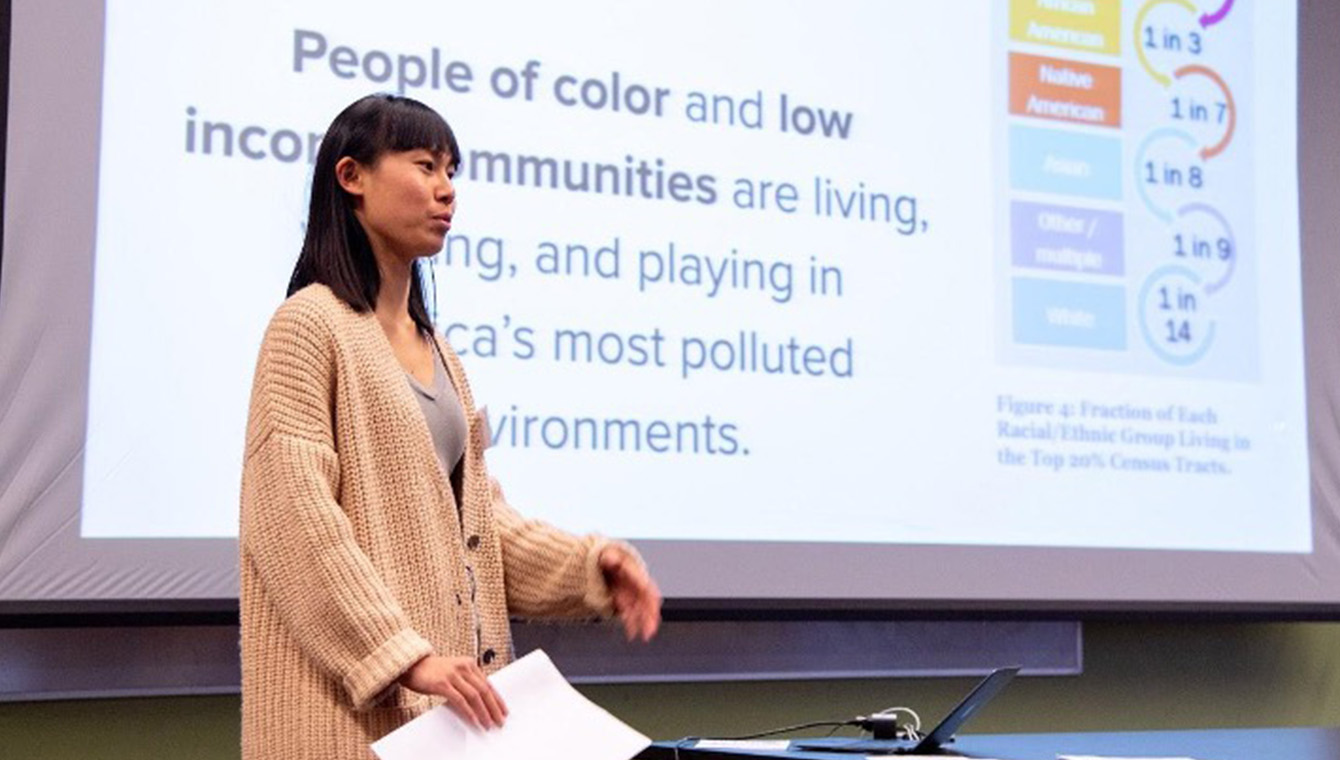
Created largely by the advocacy efforts of environmental justice groups and funded by greenhouse gas auction revenues through California's Cap-and-Trade Program, SOMAH's work to expand clean energy access to low-income and environmental justice communities in particular has clear restorative and environmental justice implications.
The program serves environmental justice communities or Disadvantaged Communities (DACs) — the 25% most pollution-burdened census tracts in CalEPA’s California Communities Environmental Health Screening Tool (CalEnviroScreen). Primarily Latino and African American, these communities face the highest disparities with respect to air pollution and health vulnerabilities, according to the agency’s report “Analysis of Race/Ethnicity, Age, and CalEnviroScreen 3.0 Scores.” And with the May 2022 publication of the California Environmental Protection Agency’s (CalEPA’s) “Final Designation of Disadvantaged Communities Pursuant to Senate Bill 535,” federally-recognized tribal lands in California are also included within the designation, acknowledging these territories as important domains of environmental justice despite data gaps that previously impeded their inclusion. The SOMAH Program helps reduce barriers for these communities to access the benefits of solar for residents living in multifamily affordable housing, through energy bill credits and job training opportunities.
Partnerships with Community-Based Organizations (CBOs)
SOMAH was designed from the start to leverage robust partnerships with leading community-based organizations championing environmental and economic justice throughout California.
CBOs are embedded in the very communities SOMAH seeks to serve and have the best understanding of what challenges their communities face. These partnerships help inform program and policy changes and ensure culturally-competent marketing, education and outreach, aimed at maximizing community benefits.
Equity in Solar Workforce Development
California's solar industry has been an important jobs engine for more than a decade, with over 68,000 solar workers employed in California as of the 2020 Solar Jobs Census.
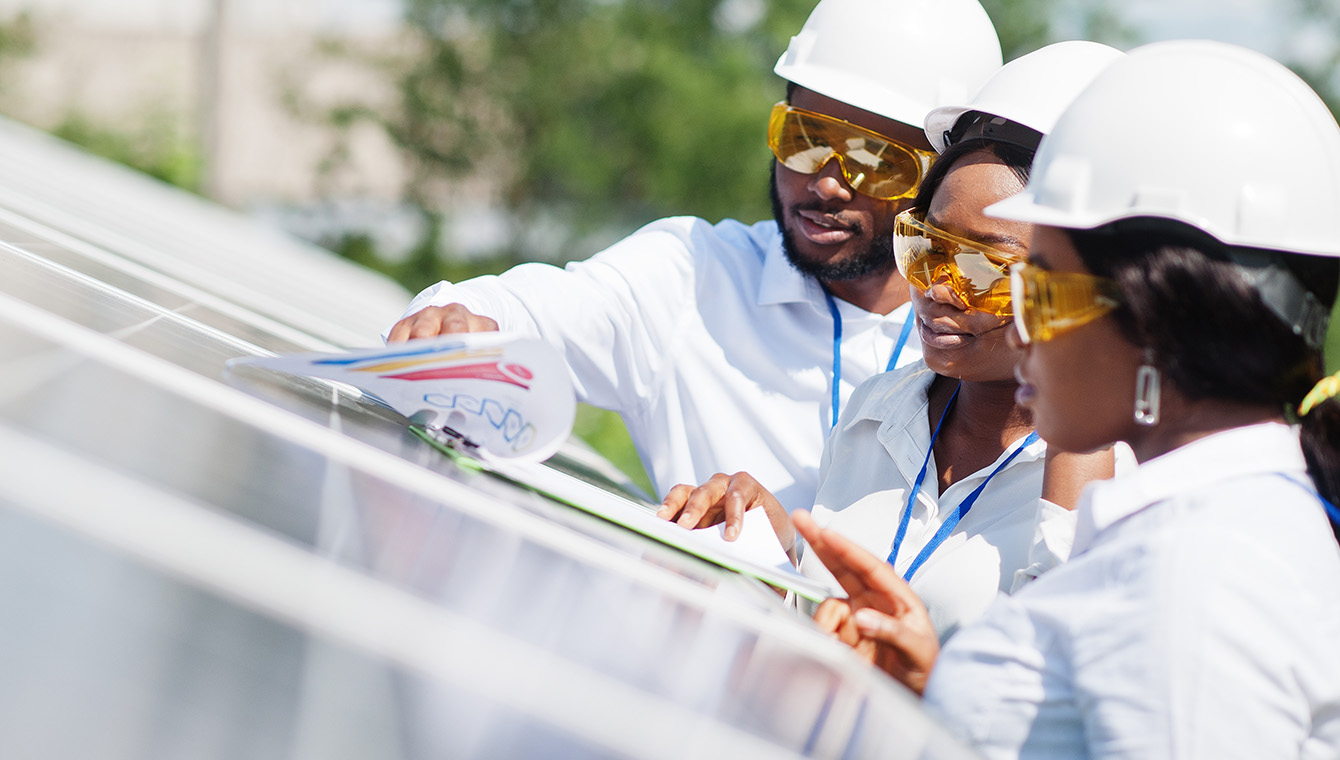
But there's more to do to ensure a diverse, equitable and inclusive workforce with career growth opportunities for people of color, women and those overcoming barriers to employment. Job training is required for every SOMAH project in the form of paid solar training opportunities and potentially permanent jobs that ensure lasting economic impacts in communities throughout California. To ensure equity, the SOMAH Program prioritizes job trainees from a project’s local area and those experiencing barriers to employment. SOMAH job trainees are also paid wages comparable to industry standards while gaining hands-on work experience, knowledge and resources to further support their professional development.
Find out how you can explore a career in the solar industry!